On the morning of April 18, at the World Coffee Museum (Buon Ma Thuot), the World Coffee Heritage Forum with the theme "From Diverse Traditions to the Shared Living Heritage of Humanity" officially commenced, opening a high level international dialogue space. The forum aims to clarify the perception of coffee as a "living heritage" – capable of "connecting people, communities, and civilizations," aspiring to become a common language of harmony, creativity, and sustainable development.
High level International Dialogue Forum on Coffee Heritage, Culture, and Future
Following the scientific workshop—the International Forum "Global Coffee Industry Value Chain – Global, Local, and Sustainable Development" (December 2025)—the World Coffee Heritage Forum, themed "From Diverse Traditions to the Shared Living Heritage of Humanity," is taking place from April 17 to 19 in Buon Ma Thuot. The event is organized by the People's Committee of Dak Lak Province in collaboration with UNESCO and the Ho Chi Minh City University of Culture, with the support of the Trung Nguyen Legend Group.
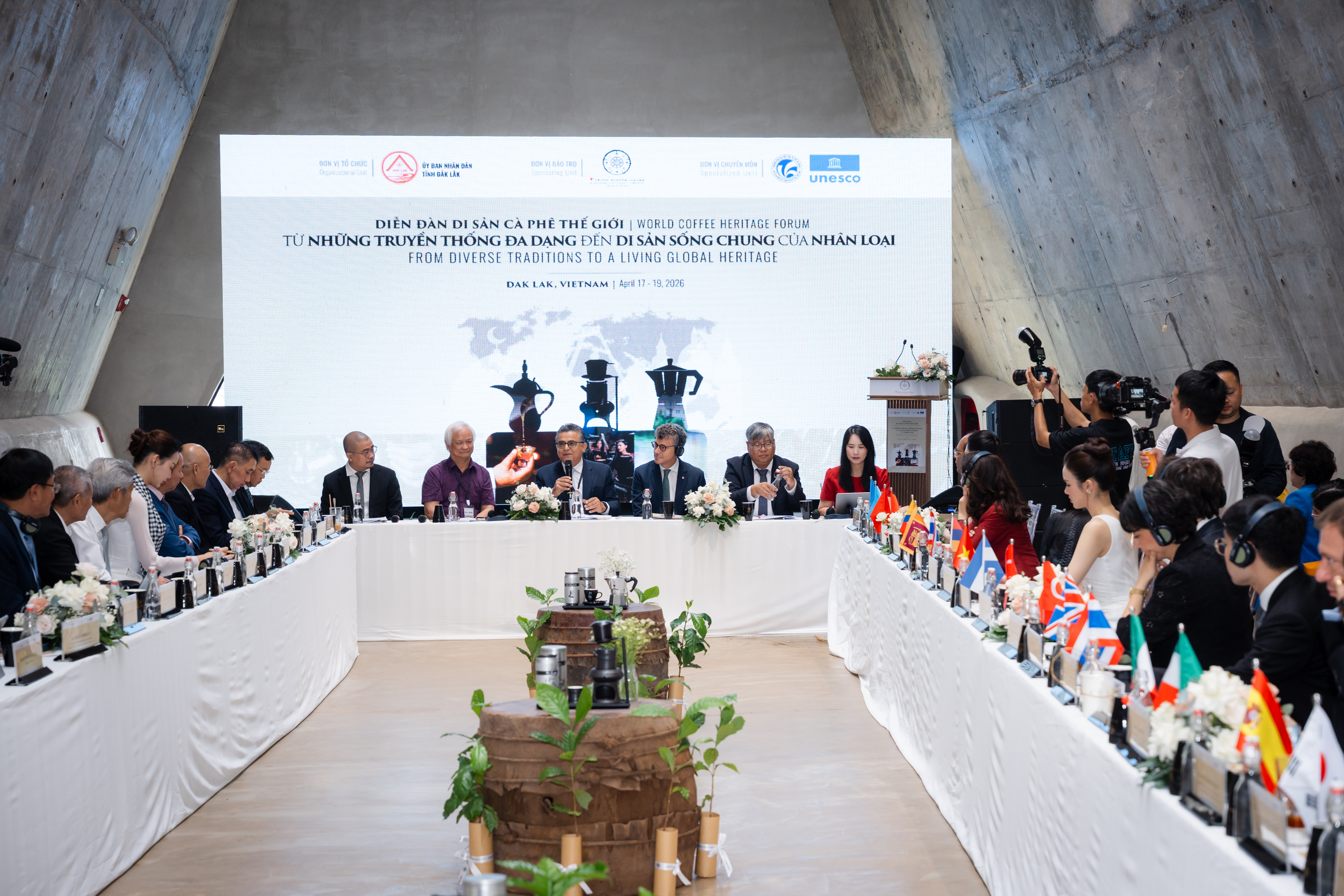
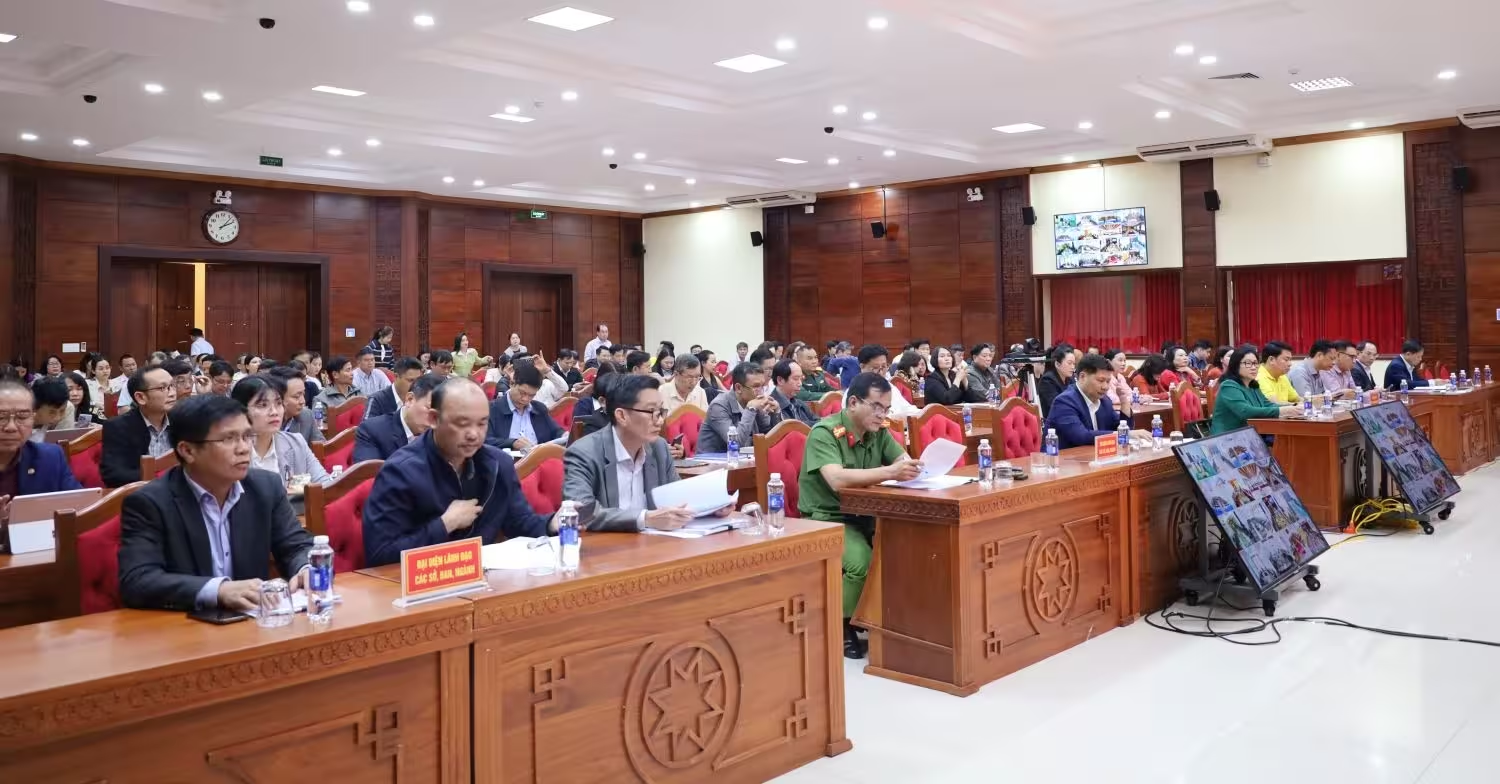
The World Coffee Heritage Forum in Buon Ma Thuot gathers leaders, international organizations, and experts, establishing a high-level dialogue space on coffee heritage, culture, and future prospects.
The forum is honored to welcome Comrade Nguyen Minh Vu – Member of the Central Committee of the Communist Party, Permanent Deputy Minister of Foreign Affairs; leaders of central and local agencies of Dak Lak Province; ambassadors; and consuls general from major coffee-producing countries, alongside international organizations, experts, and prominent figures in the fields of culture and coffee practices, both domestically and internationally. This convergence creates a multidimensional dialogue space, reflecting the interdisciplinary and intercultural nature of coffee in the global context.
Speaking at the event, Comrade Nguyen Minh Vu, Member of the Central Committee of the Communist Party and Permanent Deputy Minister of Foreign Affairs, highly appreciated the efforts of Dak Lak Province in contributing to the dissemination of Dak Lak's coffee cultural values and traditions as a resource for national sustainable development: "Introducing Dak Lak's coffee cultivation and processing knowledge to the international community not only promotes the image of the Central Highlands' land and people but also fosters multicultural dialogue, enhances the added value of Vietnam's coffee industry, and gradually establishes Vietnam's unique position on the global coffee map”.
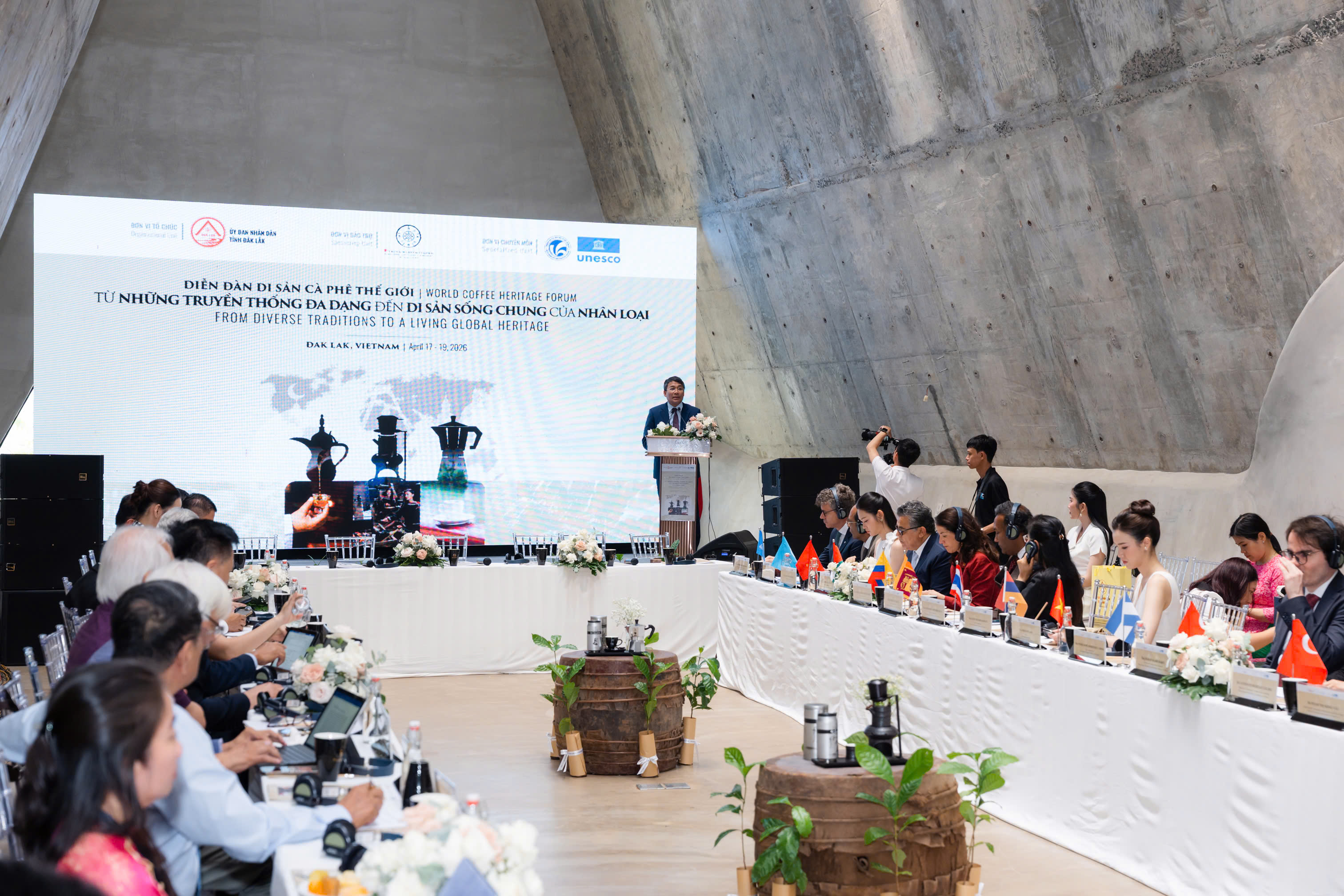
Comrade Nguyen Minh Vu, Member of the Central Committee of the Communist Party and Permanent Deputy Minister of Foreign Affairs, highly appreciates the efforts of Dak Lak province in promoting the values and cultural traditions of Dak Lak coffee as a resource for sustainable national development.
With the theme "From Diverse Traditions to the Shared Living Heritage of Humanity," the World Coffee Heritage Forum received nearly 40 research papers from domestic and international scientists and experts, approaching coffee from various perspectives, including economics, society, culture, heritage studies, processing technology, global value chains, and sustainable development.
Among these, 14 outstanding papers were presented directly at the forum on April 18 through four in-depth discussion sessions moderated by domestic and international managers and experts. The sessions covered the following topics: "History of World Coffee," "Coffee Cultivation and Production Processes," "Global Consumption Culture and the Development of Coffee Heritage," and "Best Practices in Protection and Sustainable Development," aiming to exchange insights on the global heritage values of coffee.
In the specialized session on the "History of World Coffee," international presentations from countries with prominent coffee cultures such as Palestine, Colombia, Turkey, and Italy retraced the journey of coffee across civilizations. These discussions highlighted the diversity in reception and practices in each country, showcasing the "resilient vitality" and global reach of coffee. They also affirmed coffee's role as a "space for social interaction and cultural exchange."
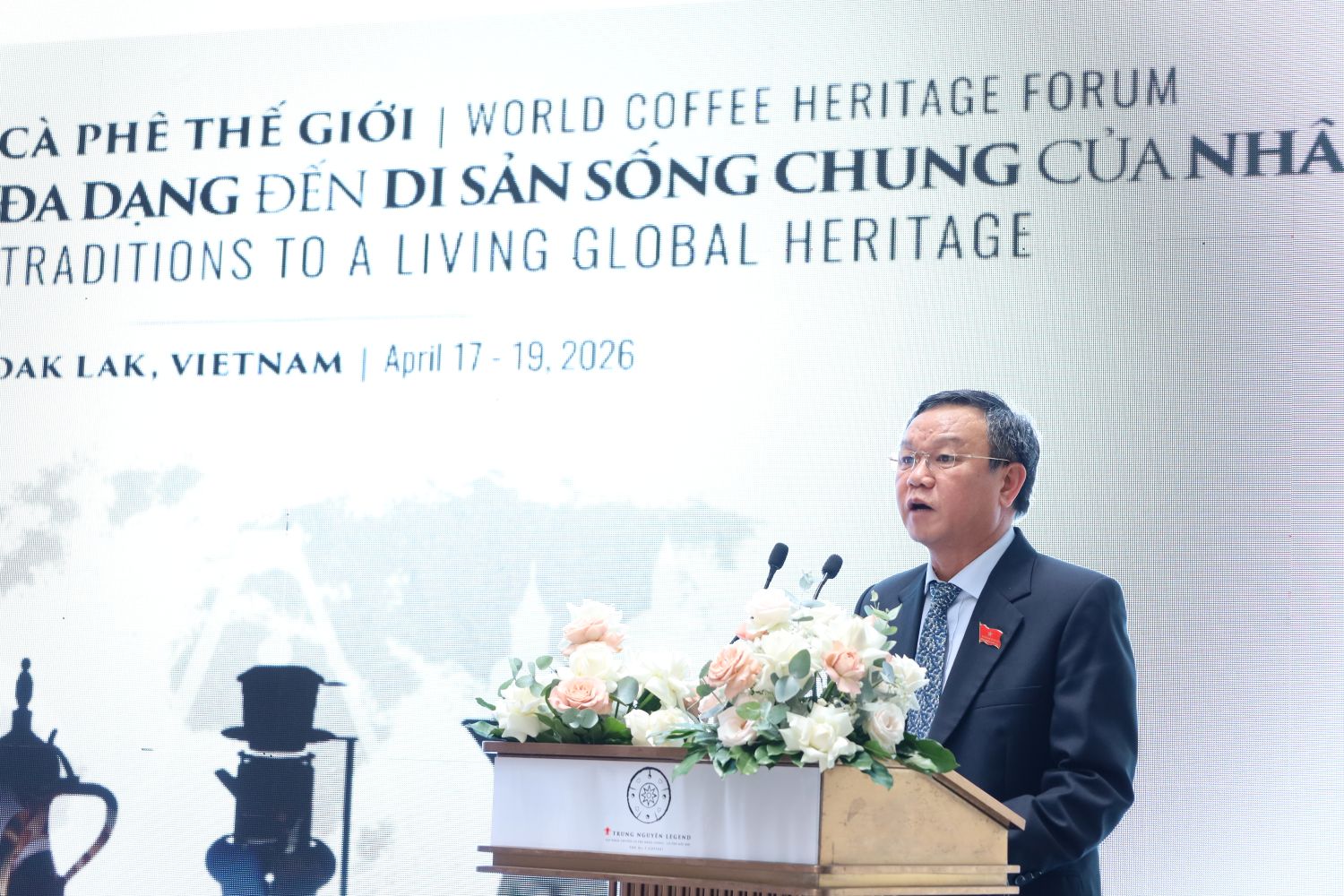
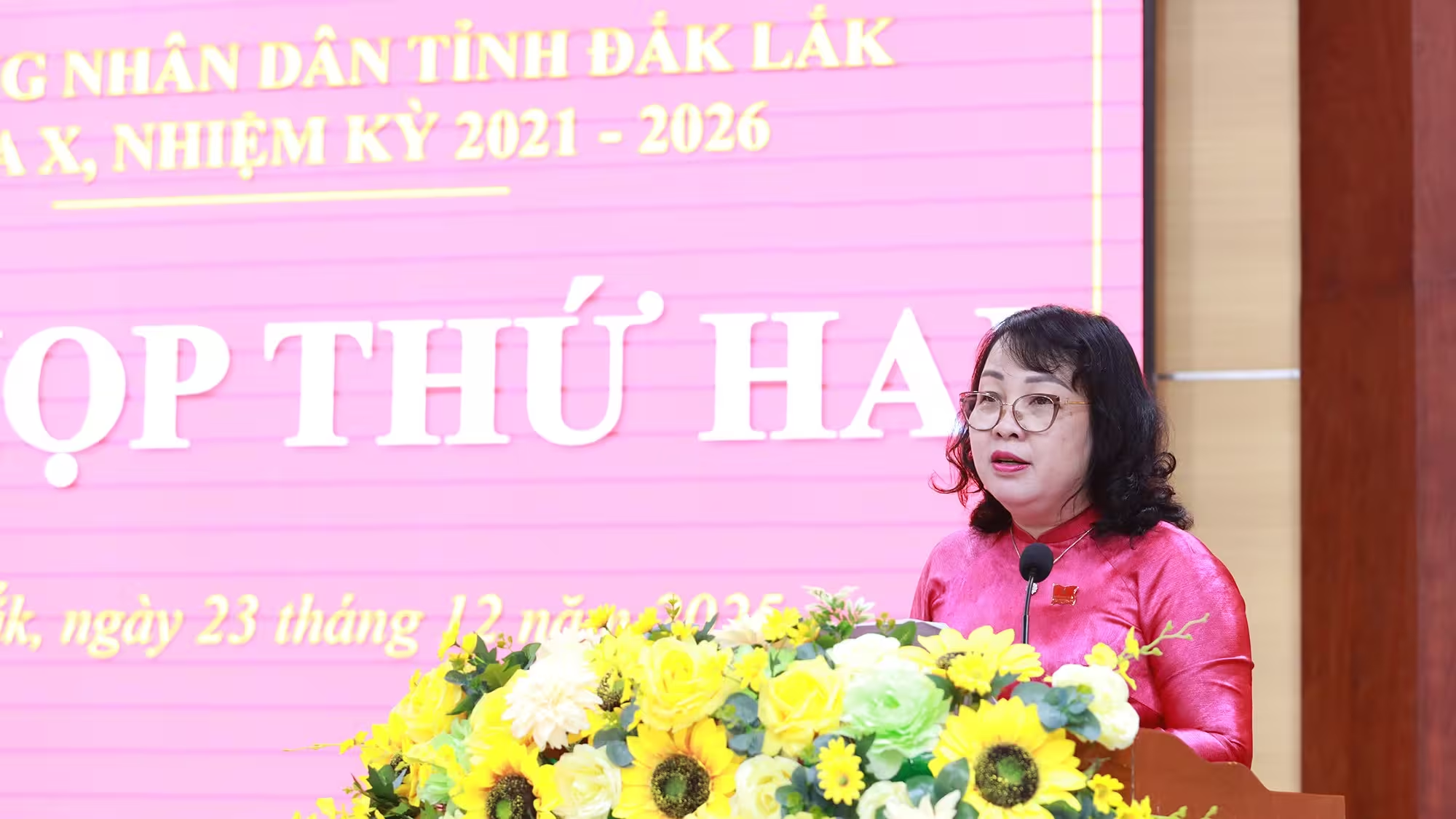
Comrade Dao My, Vice Chairman of the People's Committee of Dak Lak Province, delivered a speech at the opening session of the Forum.
With the theme "Coffee Cultivation and Production Processes," discussions delved into the coffee cultivation and production ecosystem as an integrated entity connecting indigenous knowledge, cultural landscapes, and community livelihoods. Analyses of the global coffee value chain, the coffee industry's social responsibility to communities, and development orientations for Dak Lak to transition from a key raw material region to becoming the "Coffee Capital of the World" were highlighted. This vision is tied to the journey of building Vietnam's coffee cultural landscape towards UNESCO heritage recognition and promoting the coffee ecosystem in the global green transition process.
The theme "Global Consumption Culture and the Development of Coffee Heritage" at the forum opened up approaches to coffee from the perspective of culture, lifestyle, and the ways in which people meet, dialogue, and create. The transformation of coffee spaces from simple consumption experiences to cultural and heritage hubs- integrating contemporary coffee philosophies and practices such as Coffee Philosophy, Slow Coffee Culture, and Coffee Meditation, alongside the application of digital technology is contributing to shaping coffee as a "living heritage" with strong adaptability and influence in contemporary life.
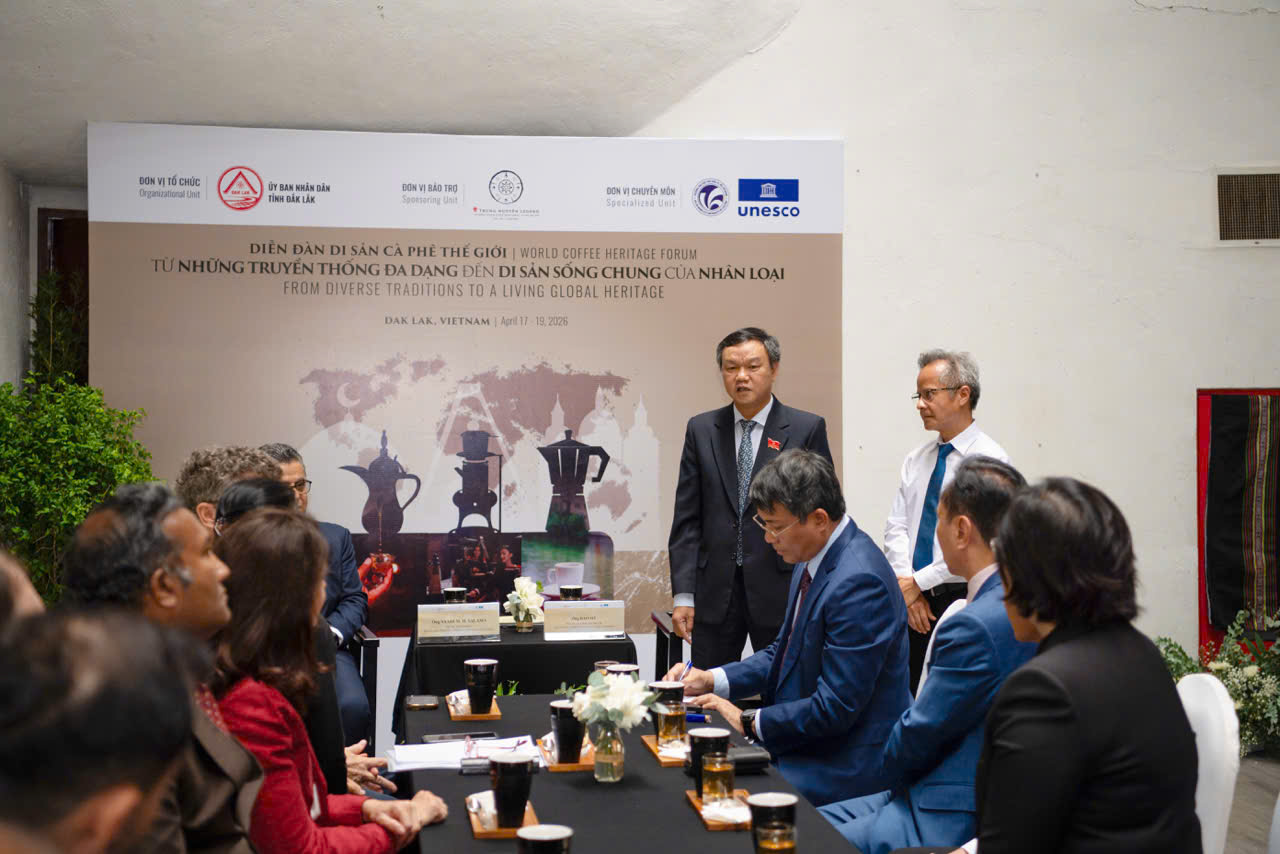
Within the framework of the World Coffee Heritage Forum, Comrade Dao My, Vice Chairman of the Dak Lak Provincial People's Committee, met and exchanged ideas with Ambassadors, Consuls General of major coffee-producing nations, and international delegates regarding the values of Dak Lak coffee and Vietnam's role in honoring cultural diversity and preserving humanity's living heritage.
Expanding from international references, the thematic session "Best Practices in Protection and Sustainable Development" shared specific models featuring best practices from Thailand and the FAO's approach to sustainable coffee systems, harmonizing community livelihoods with environmental stewardship. On this foundation, presentations further clarified the concept and criteria of "Best Safeguarding Practices" under UNESCO, while emphasizing the central role of communities in preserving, transmitting, and promoting heritage, as well as the opportunities for sustainable livelihood development for communities when heritage is properly identified and valued.
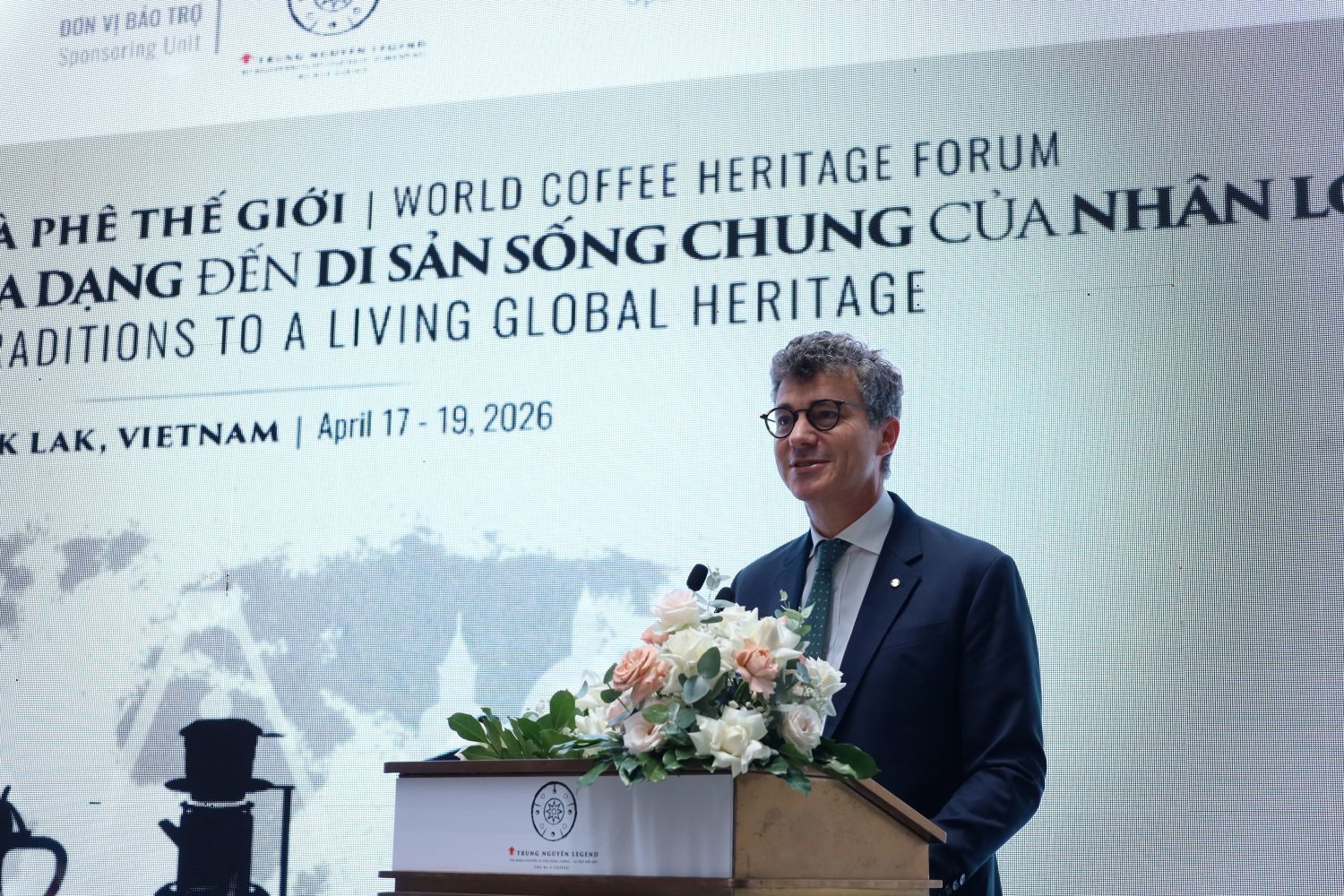
Mr. Jonathan Baker, Head of the UNESCO Office in Vietnam, shared insights at the Forum.
In his opening remarks, Comrade Dao My, Provincial Party Member and Vice Chairman of the Dak Lak Provincial People's Committee, emphasized: "The Forum is not only a venue for academic and practical exchanges but also a practical step to further clarify the outstanding value of coffee heritage in the context of globalization, promote dialogue among coffee civilizations, and share international experiences in safeguarding intangible cultural heritage, especially Best Safeguarding Practices under the 2003 UNESCO Convention."
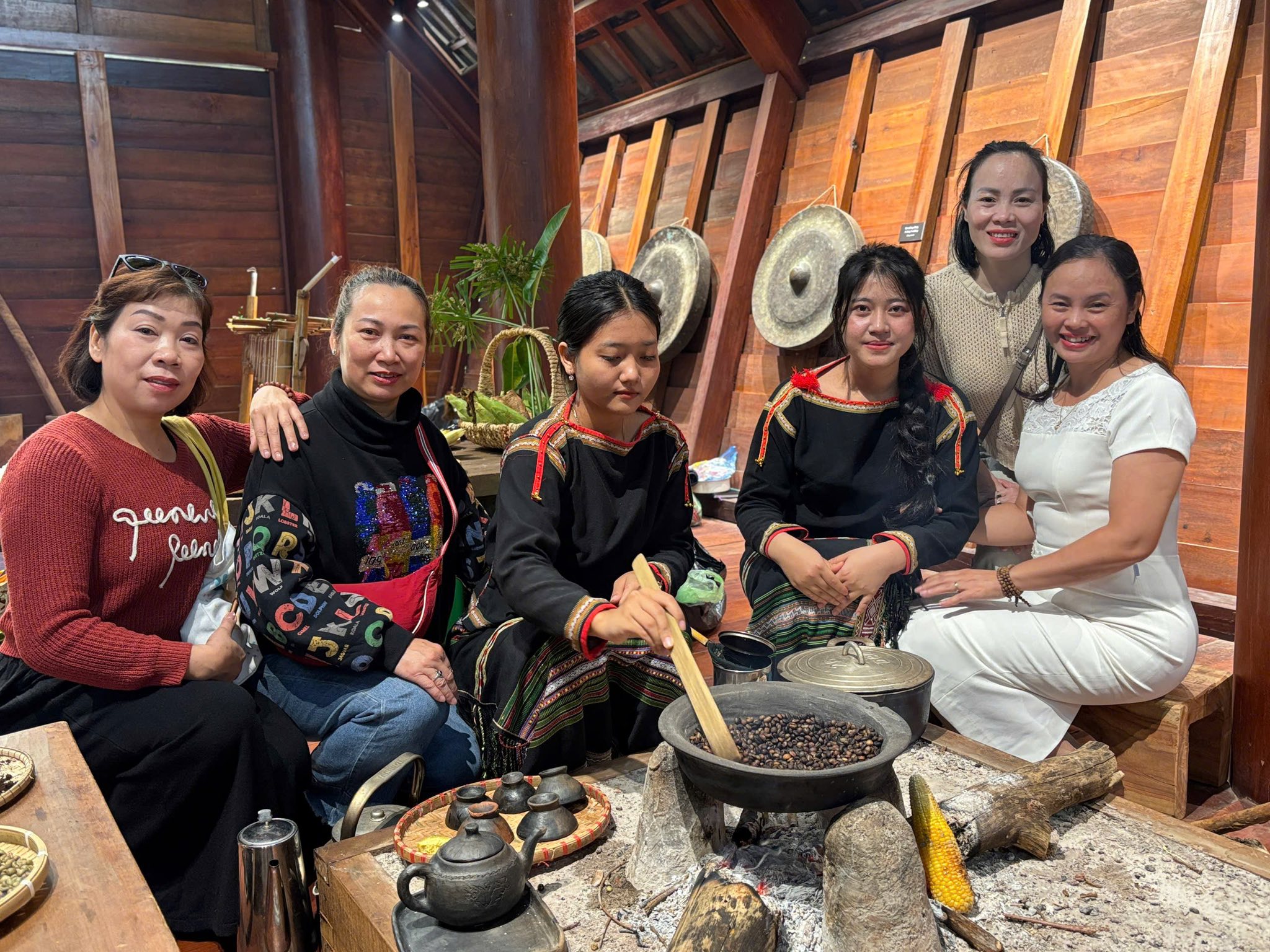
Within the framework of the Forum, various activities were organized to provide a comprehensive experience of the value of Vietnamese coffee spanning Physical Coffee, Social Coffee, and Spiritual Coffee - thereby transcending the framework of "an agricultural product or economic sector" to be recognized as a "living heritage" associated with community identity and lifestyle.
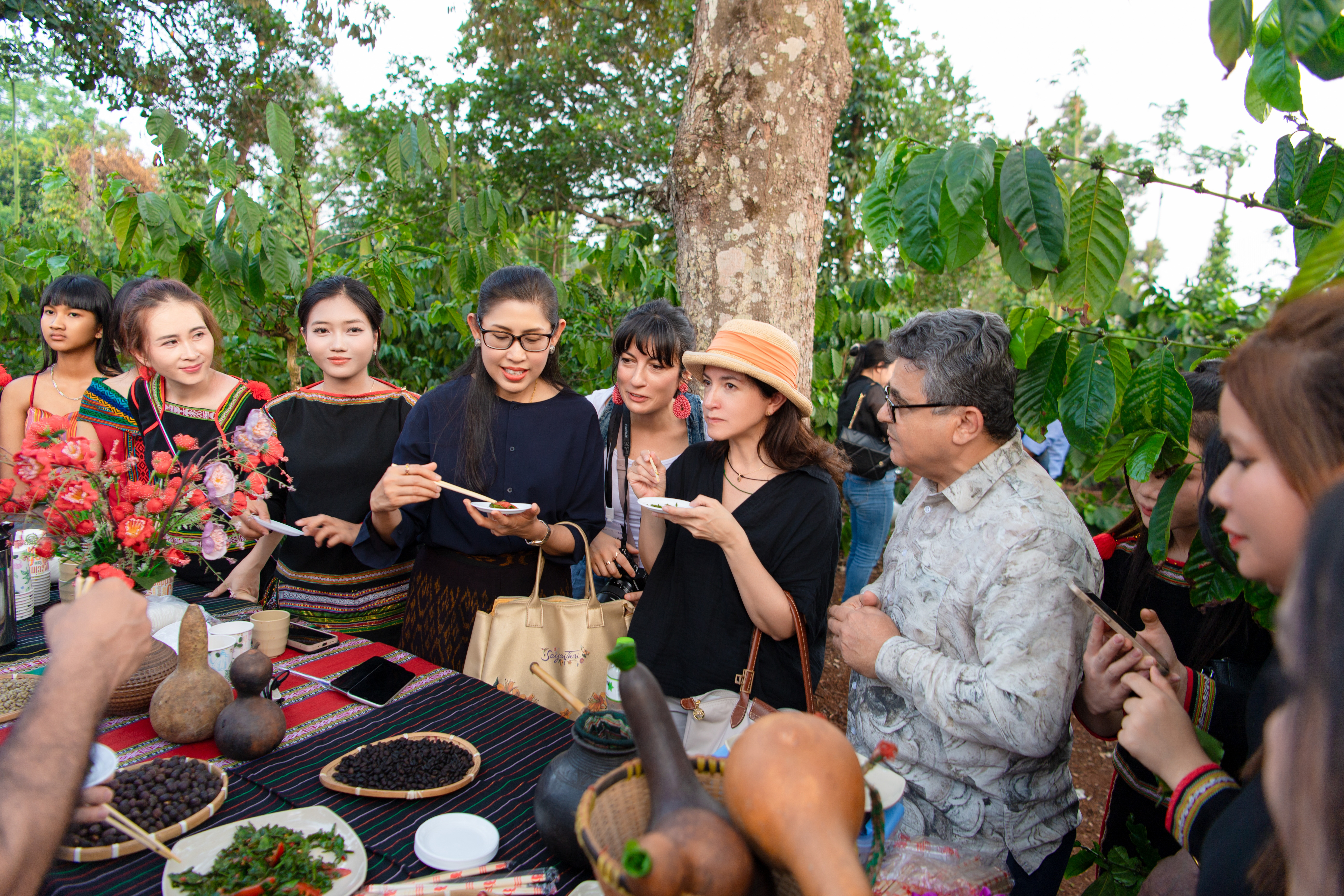
Ms. Urawadee Sriphiromya, Ambassador of the Kingdom of Thailand to Vietnam; Ms. Camila Polo Florez, Ambassador of Colombia to Vietnam; and Mr. Saadi Salama, Ambassador of Palestine to Vietnam (center, from left to right), experienced indigenous coffee culture in the coffee garden space in Buon Tong Ju, Dak Lak.
Vietnamese Coffee and the Vision of a "Living Heritage" in the Global Flow
At the World Coffee Heritage Forum, themed "From Diverse Traditions to the Shared Living Heritage of Humanity," coffee is perceived not merely as an agricultural product or an economic sector but as a "living heritage" - a cultural space where knowledge, customs, lifestyles, and spiritual values are crystallized, practiced, and transmitted by communities across generations.
From the perspective of heritage studies, Mr. Jonathan Baker, Head of the UNESCO Representative Office in Vietnam, stated: "According to the 2003 Convention for the Safeguarding of the Intangible Cultural Heritage, heritage is not understood as an object or product but as the knowledge, skills, social practices, and meanings that communities recognize as part of their cultural life and transmit across generations."
In the historical journey of coffee, it has never been merely the history of a crop; it is the history of exchanges, commerce, knowledge, creativity, developmental aspirations, and enduring human encounters. From Ethiopia, Yemen, the Ottoman Empire, Europe, and the Americas to Asia and Vietnam, each region and nation that embraced coffee has enriched this shared value with its own identity, memories, and unique characteristics, creating a diverse cultural ecosystem connected within the global flow.
This foundation underpins the enduring vitality of coffee and fosters efforts to elevate coffee as a shared living heritage - not homogenized, not dissolved, but coexisting, respecting, dialoguing, and uplifting one another..
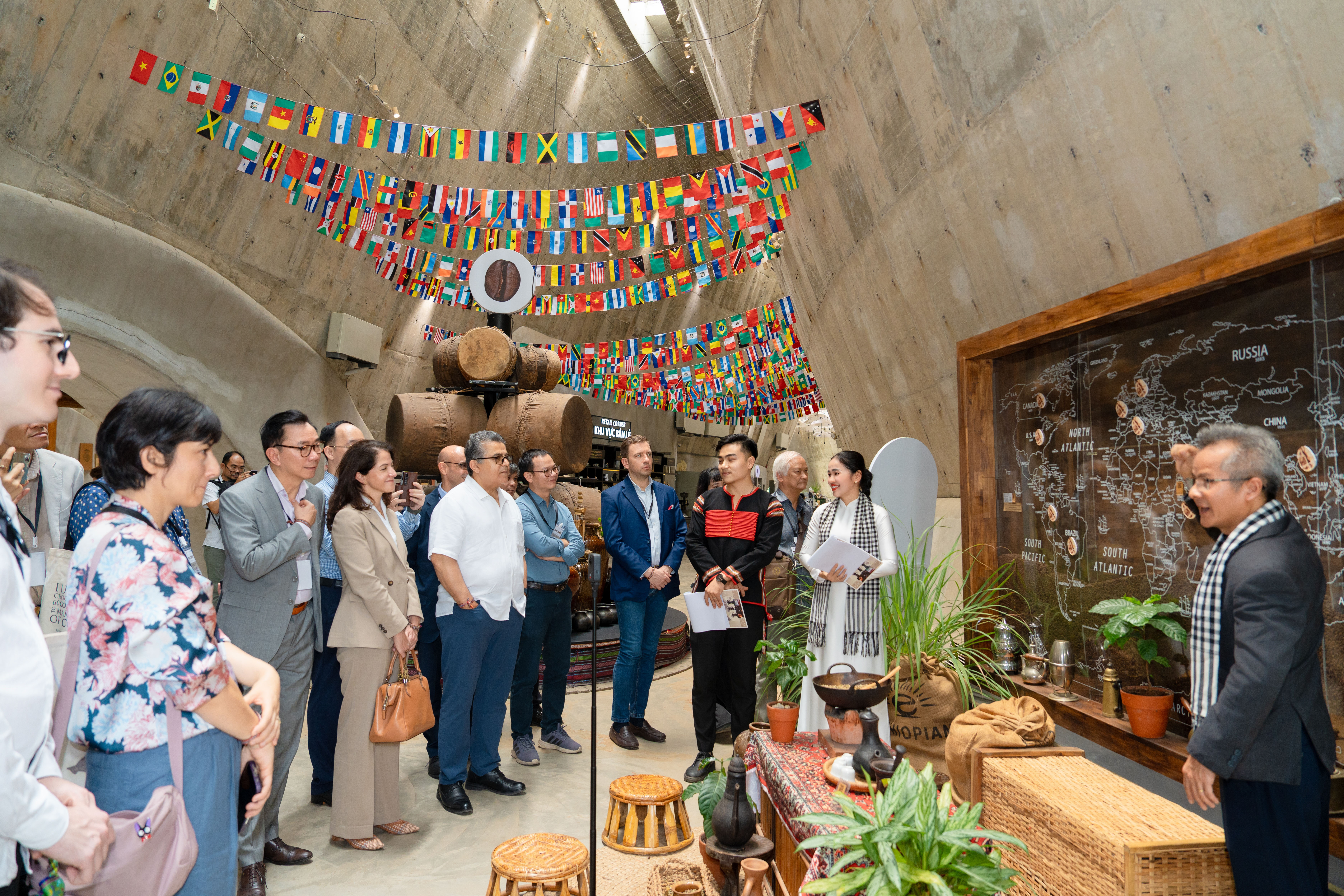
Guests, Ambassadors, and Consuls General from nations with distinctive coffee traditions visited the World Coffee Museum - an iconic structure in Buon Ma Thuot, Dak Lak - the Coffee Capital of the World.
In this context, Vietnam holds a special position, not only as one of the world's leading coffee producers and exporters but also as a place where unique conditions converge to form and develop a rich and distinctive coffee culture. Particularly in Buon Ma Thuot, Dak Lak Province, coffee is intertwined with indigenous knowledge systems related to cultivation, care, harvesting, processing, enjoyment, cultural interactions, and the organization of life associated with coffee, embodying the values of a "living heritage" that must be preserved, safeguarded, and revitalized in contemporary life.
In March 2025, the Ministry of Culture, Sports, and Tourism awarded the certification of "Knowledge of Coffee Cultivation and Processing in Dak Lak" as a National Intangible Cultural Heritage, affirming the value of coffee through indigenous knowledge, community creativity, and the harmonious relationship between humans, nature, and culture. Following this national recognition, it is essential to clearly identify the outstanding values of "Knowledge of Coffee Cultivation and Processing in Dak Lak" – as a vibrant cultural entity with historical depth, community significance, and critical importance in the current period.
Speaking at the forum, a representative of Trung Nguyen Legend Group emphasized that a heritage only truly "lives" when it is correctly understood, continuously practiced, transmitted, and creatively adapted in the contemporary context. This serves as the foundation for sustainably preserving and promoting coffee values, linked to socio-economic development and improving community livelihoods.
In a world facing numerous challenges in social connectivity and sustainable development, positioning Vietnamese coffee as a "living heritage" will contribute to elevating Vietnamese coffee as a universal language of harmony, creativity, and sustainable development, where cultures can coexist, respect one another, and collectively advance to contribute to human civilization.
According to the philosophy of Dang Le Nguyen Vu, Founder and Chairman of Trung Nguyen Legend Group: Coffee is a treasure of Heaven and Earth, a Heritage of Humanity, and a Solution for the Future. Coffee, therefore, is not merely a story of an industry but becomes part of a larger journey: the journey of creating cultural values meaningful to the present and future of humanity. This also serves as the foundation for positioning places like Buon Ma Thuot, Dak Lak, and Vietnam as exemplary spaces of global coffee culture.
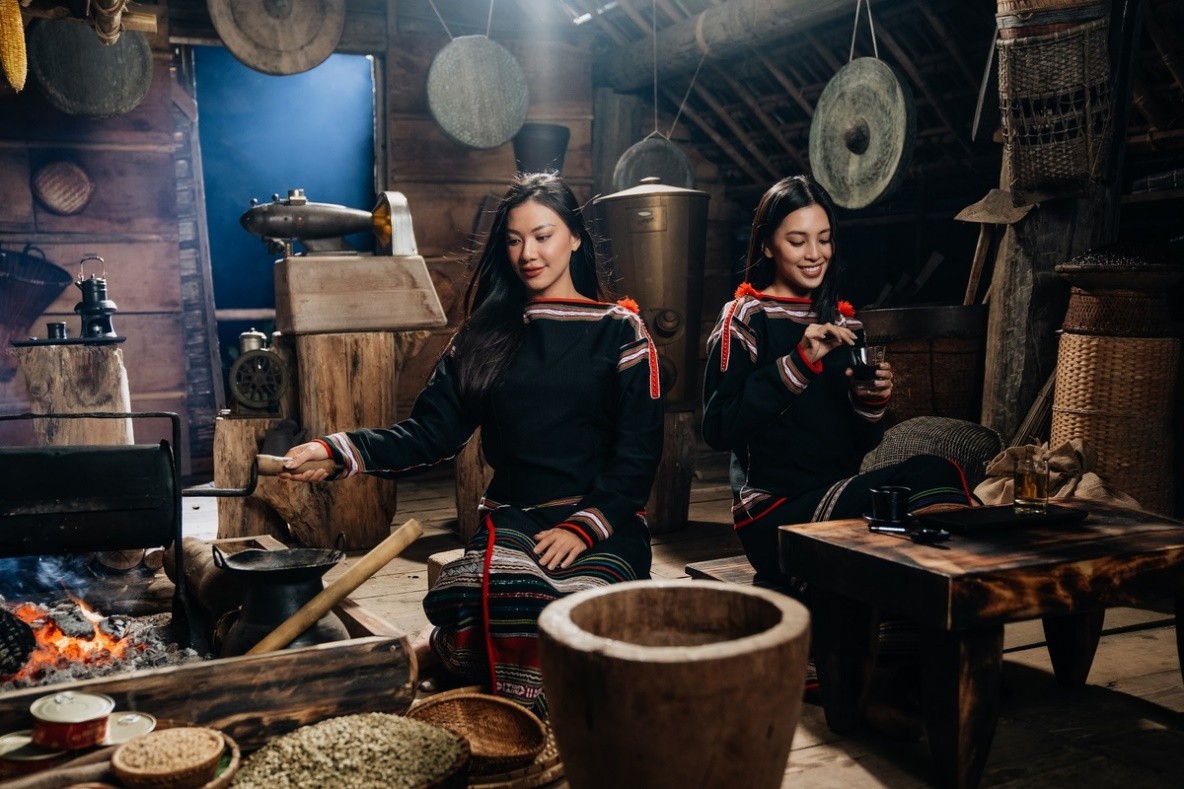
Dak Lak coffee is recognized as a comprehensive ecosystem where indigenous knowledge, cultural landscapes, and community livelihoods intertwine within the global value chain.
The World Coffee Heritage Forum 2026 is not merely an academic event but a practical step in creating a space for dialogue, recognition, systematization, and elevation of the value of "knowledge of coffee cultivation, processing, and enjoyment" as a vibrant cultural entity.
With the support of the Government, local authorities, the efforts of businesses and the community, as well as international exchanges, experiences, and initiatives at the World Coffee Heritage Forum, it is expected to continue laying the scientific and practical foundation for "Dak Lak Coffee Cultivation and Processing Knowledge" to be inscribed on the list of good practices for safeguarding intangible cultural heritage by UNESCO. This contributes to elevating Vietnam's coffee culture as a symbol of national cultural identity on a global scale, recognized by UNESCO as a heritage of humanity.